ick up a pencil. Drag it across paper. That's draw in its most elemental form—a physical act that connects intention to mark. I've watched countless beginners freeze at this step, convinced they need talent before they can make a line. But drawing isn't a performance;it's a conversation with the surface. The moment you accept that, the pressure dissolves.In my own studio practice, I keep a sketchbook purely for warm-ups. No erasing。
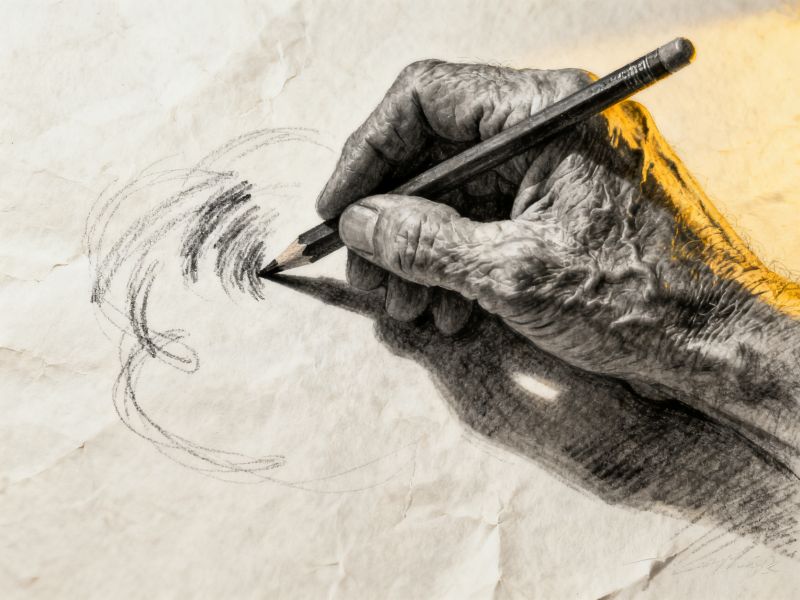
no corrections. Just five minutes of continuous draw—loops, hatching, blind contours. The results are often ugly. Yet something shifts: my hand loosens, my eye sharpens. A 2019 study in Frontiers in Psychology found that even ten minutes of freehand draw improves visual memory retention by 18%. The researchers didn't test masterpieces;they tested scribbles. That's the point. Draw is a cognitive workout, not a product.Walk through any design studio and you'll see draw functioning as a shared language. Architects sketch over blueprints, animators thumb-nail sequences。surgeons diagram procedures on napkins. A colleague who leads a trauma team told me she draws the injury site before every operation—not for publication, just to externalize spatial relationships. “If I can draw it, I can fix it” she said. That sentence stuck with me. Draw is a rehearsal for action. It forces ambiguity into the open where you can wrestle with it.Digital tools haven't killed draw;they've multiplied its entry points. Procreate, Photoshop, even 3D sculpting apps—all rely on the same fundamental gesture. But here's a caution: a stylus on glass doesn't give you the same resistance as graphite on toothy paper. That friction matters. It teaches you to commit. I've seen students who can render photorealistic eyes on an iPad but can't draw a convincing cube on a whiteboard. The medium isn't neutral. Choose the one that makes you uncomfortable, then draw until it doesn't.Maybe the most radical thing about draw is its silence. No notifications, no metrics, no audience unless you invite one. You sit, you mark, you observe. That's it. In a culture obsessed with output, draw offers something rare: a private process that rewards attention over speed. I don't draw every day. Some weeks I forget. But when I return。the pencil still works, the paper still waits. That reliability is worth protecting.